
Next Production


Verdi's
Date: 27th - 30th of January 2027
Performances start at 7:30pm
Macbeth
Venue: St Andrews URC
Corner of Finchley Road and Frognal Lane
London, NW3 7DY
Director: Lee Davis
Musical Director: Giannis Giannopoulos
About "Macbeth"
Verdi loved Shakespeare long before he dared to set him. He read the plays in Italian translation, kept them close from his youth, and spoke of Shakespeare almost as a member of the family. So when he came to write Macbeth in 1846–47, it was not simply another commission in the exhausting run of operas he later called his "years in the galley". It was the work he cared about most, and he told his father-in-law and first patron, Antonio Barezzi, exactly that when he dedicated the score to him.
The care shows in how the opera was made. Verdi did not wait to be handed a libretto. He drafted the shape of the drama himself, in prose, and then pressed his librettist Francesco Maria Piave line by line towards it — fewer words, stronger words, nothing decorative. When he still wasn't satisfied, he brought in the poet Andrea Maffei to sharpen the witches' scenes and Lady Macbeth's sleepwalking. Verdi's instruction to his singers has become famous: serve the poet better than the composer.
What he was after was something Italian opera of the 1840s did not usually provide. There is no love story in Macbeth. There is no tenor hero courting a soprano; the tenor, Macduff, waits until the fourth act to sing a single lament for his murdered family. At the centre instead is a marriage — two people bound together by ambition, by a crime, and eventually by the guilt that pulls them apart. Verdi identified three protagonists in the opera: Macbeth, Lady Macbeth, and the chorus of witches.
Those witches are one of his boldest strokes. Shakespeare's three become a whole chorus, gathered on the heath, half comic and half genuinely sinister, greeting Macbeth with a prophecy that he will be king. It is the oldest question in the play, and Verdi keeps it open: do the witches foretell what will happen, or do they simply say aloud what Macbeth already wants, and so make it happen? Everything that follows — the murder of Duncan, the murder of Banquo, the banquet where the dead return, the tightening of the tyrant's grip on a country he cannot hold — follows from that moment of being told what he wished to hear.
Verdi was equally uncompromising about Lady Macbeth. He did not want a beautiful voice. He wanted something hard, veiled, almost ugly — a sound with the devil in it — and he said so plainly when a famously lovely singer was proposed for the part. His first Lady, Marianna Barbieri-Nini, later remembered rehearsing the great Act I duet and the sleepwalking scene until she had lost count, and being hauled off by Verdi to run the duet one more time in a foyer of the theatre while the audience was already arriving. The sleepwalking scene, in particular, he wanted sung almost without gesture, in a voice that seems to come from somewhere else: a woman who once summoned the darkness now unable to escape it, rubbing at a stain no one else can see.
The premiere at the Teatro della Pergola in Florence on 14 March 1847 was a success. Nearly twenty years later, Verdi returned to the score for a Paris production, and the Macbeth usually performed today is that 1865 revision. He added Lady Macbeth's chilling "La luce langue", the chorus of exiles mourning their oppressed country, and a new ending — replacing Macbeth's dying aria with the victory of the people who overthrow him. Paris, to his surprise, was unmoved. Posterity has taken a different view.
Macbeth is Verdi at his most concentrated: an opera about ambition and its cost, about what a marriage can talk itself into, about power that corrodes the person holding it. There are no lovers to root for and no rescue. There is, instead, a banquet that turns to horror, a country in mourning, a sleepless queen, and a man who gets everything he was promised and finds it worth nothing.
About the Director
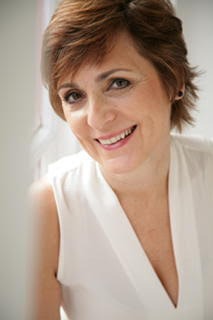
Lee Davis
Lee began her career in the theatre as a singer. She has sung in many venues throughout England as well as abroad and is an experienced performer in a variety of musical genres, including song, oratorio, and extensively in opera. Her venture into directing started by assisting with many Operas and then co-writing and directing musical revues. Since then she has directed Opera, Operetta, and most of the popular Gilbert and Sullivan Operettas.
About the Musical Director
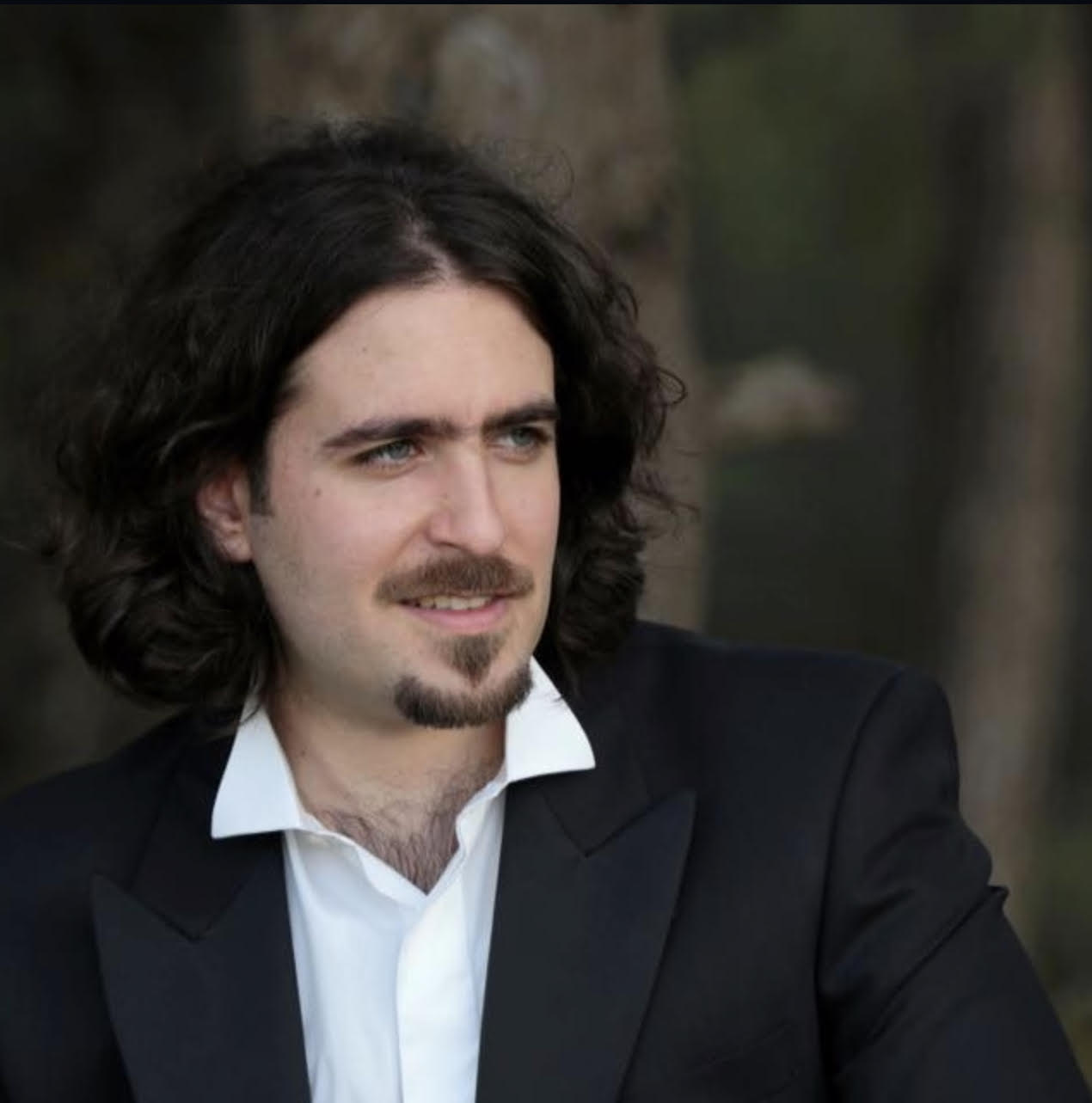
Giannis Giannopoulos
Giannis Giannopoulos is a London-based Greek pianist/conductor. Giannis holds a degree from the Royal Academy of Music in London and the Royal Birmingham Conservatoire in Piano Performance and Orchestral Conducting respectively.
Giannis has been working for Brent Opera since 2024. He has also worked as a musical director in the Greek National Opera, Berlin Opera Group, Passaggio Oper, Opera Diaspora, and Opera Kipling, taking part in the Fringe Festival in Edinburgh, The Camden Fringe, and other venues. Through his opera group "Corpus Animae", he staged Teleman's "Il Pimpinone" for the Aegina International Music Festival and runs opera repertoire workshops in London.
Upcoming performances include the Brahms Requiem with Brent Opera and shows in the Camden Fringe and Theatre Basse Passiere with Opera Kipling in the summer.
Giannis teaches orchestral conducting at Morley College and Queen Elizabeth’s School for Boys.
Our cast
Chorus
Andrew Tucker, Anna Tamba, Bethany Shordon, Bob Luder, Christine Fahy, Christian Sawyer, Clara Elms, Crystobelle Matthew Rosacorde, Dai Noble, David Lowick, Doreen Morgans, George Vagionis, Helena Goldie, Jamie Wing, Jaymes Aaron, Louisa Shindle, Lucy Myers, Lyndsey Gallagher, Paddy Cockshutt, Paula Pardo, Regina Roszczynska, Ross Tatham, Sally Long, Sara Meadows, Vicky Calver
Macbeth - Duncan Wilson
Lady Macbeth - Melody Compton
Banquo / Doctor - Kevin Rodgers
Macduff / Malcolm - Guido Smeets
Macbeth - Shelden Mathieson
Lady Macbeth - Alexandra Wald
Macduff / Malcolm - Mike Wells
Banquo / Doctor - Richard Perry
Dama - Sharon Brandelli
Dama - Anne O’Donnell
Servant to Macbeth
Herald
Assassin
Witch 2 - Vicky Calver
Witch 1 - Regina Roszczynska
Witch 3 - Crystobelle Matthew Rosacorde
27th & 29th of January
27th & 29th of January
27th & 29th / 28th & 30th of January
27th & 29th of January
27th - 30th of January
27th - 30th of January
27th - 30th of January
27th - 30th of January
27th - 30th of January
27th - 30th of January
28th & 30th of January
28th & 30th of January
28th & 30th of January
28th & 30th / 27th & 29th of January
27th & 29th / 28th & 30th of January
28th & 30th / 27th & 29th of January
Contact us
We would love to hear from you! If you have any questions, comments, or feedback about Brent Opera, or if you are interested in joining us as a performer or volunteer, please get in touch.
E-mail: brentopera@hotmail.co.uk
sopranomeadows45@gmail.com
Phone: 020 7794 9516
Charity number: 1206019